
Through tea, we invite you to take a pause and enjoy this present moment.
[ The Space Between ]
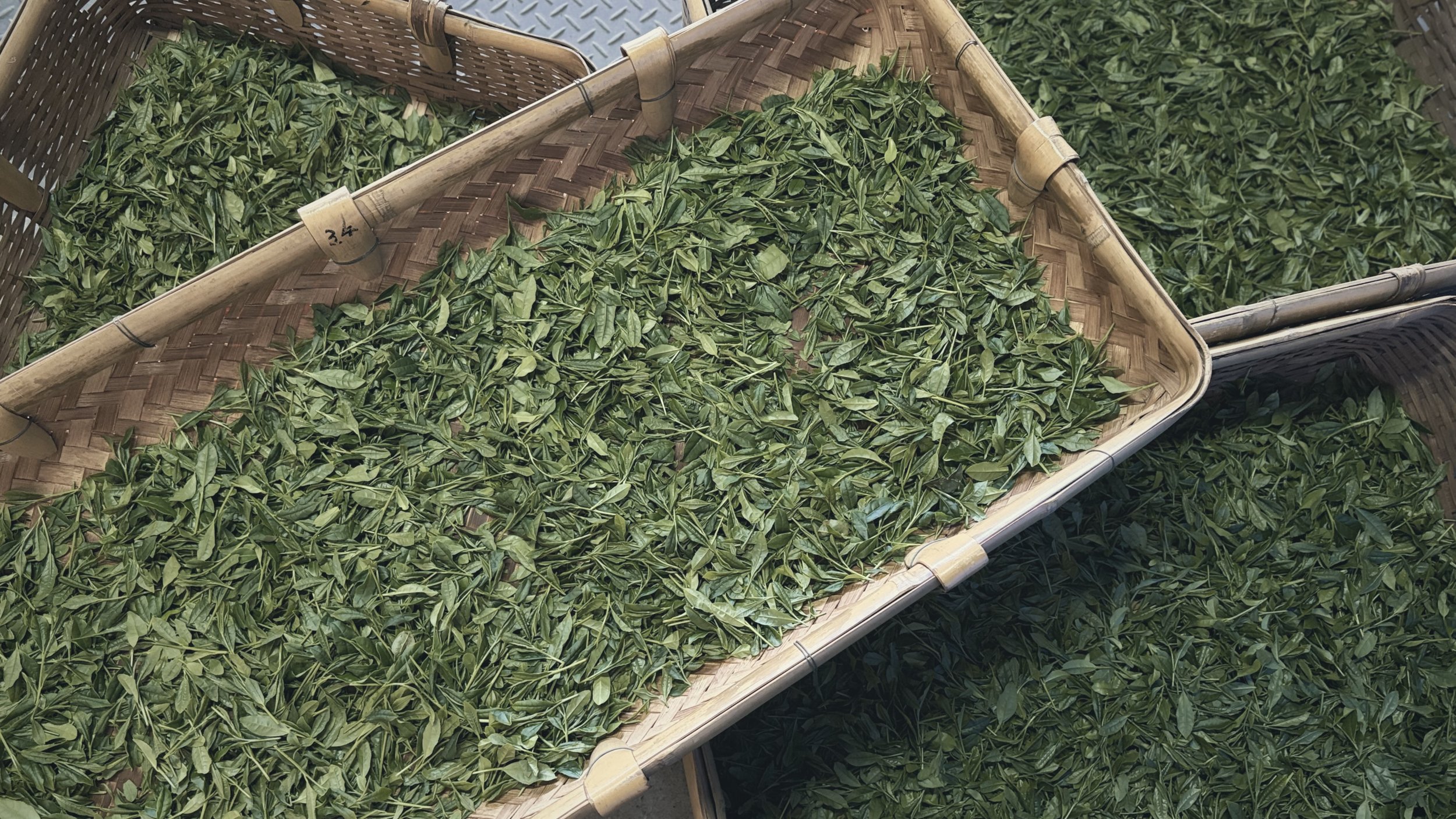
MA 間 is a Japanese concept without a direct English translation — it points to the meaningful pause between things: the space between two notes that makes music, the breath between words that makes meaning, the stillness between actions that makes a ceremony sacred.
It is not emptiness. It is potential.
Tea is MA 間 was born from this idea — that within the pause, awareness, connection, and possibility arise. We believe tea is one of the oldest and gentlest ways to find that space.
[ Our Sourcing ]
We source only from tea producers we have personally met — whose farms and tea forests we have walked, whose hands we have shaken, whose tea we have shared and enjoyed.
We seek out tea makers who preserve tradition rather than chase trends — small-scale growers living in harmony with the land, guided by respect for the tea plant itself rather than by yield or speed. Many work organically or biodynamically; others follow older, unnamed methods passed down through generations, attuned to the rhythms of season, soil, and spirit rather than to a certification label.
What matters to us is not a stamp of approval, but a way of being with the land — the same quality of attention we hope you'll find in each bowl of tea.
Every tea we offer carries the story of the hands that grew it, the forest or field it came from, and the unique spirit of the plant itself.
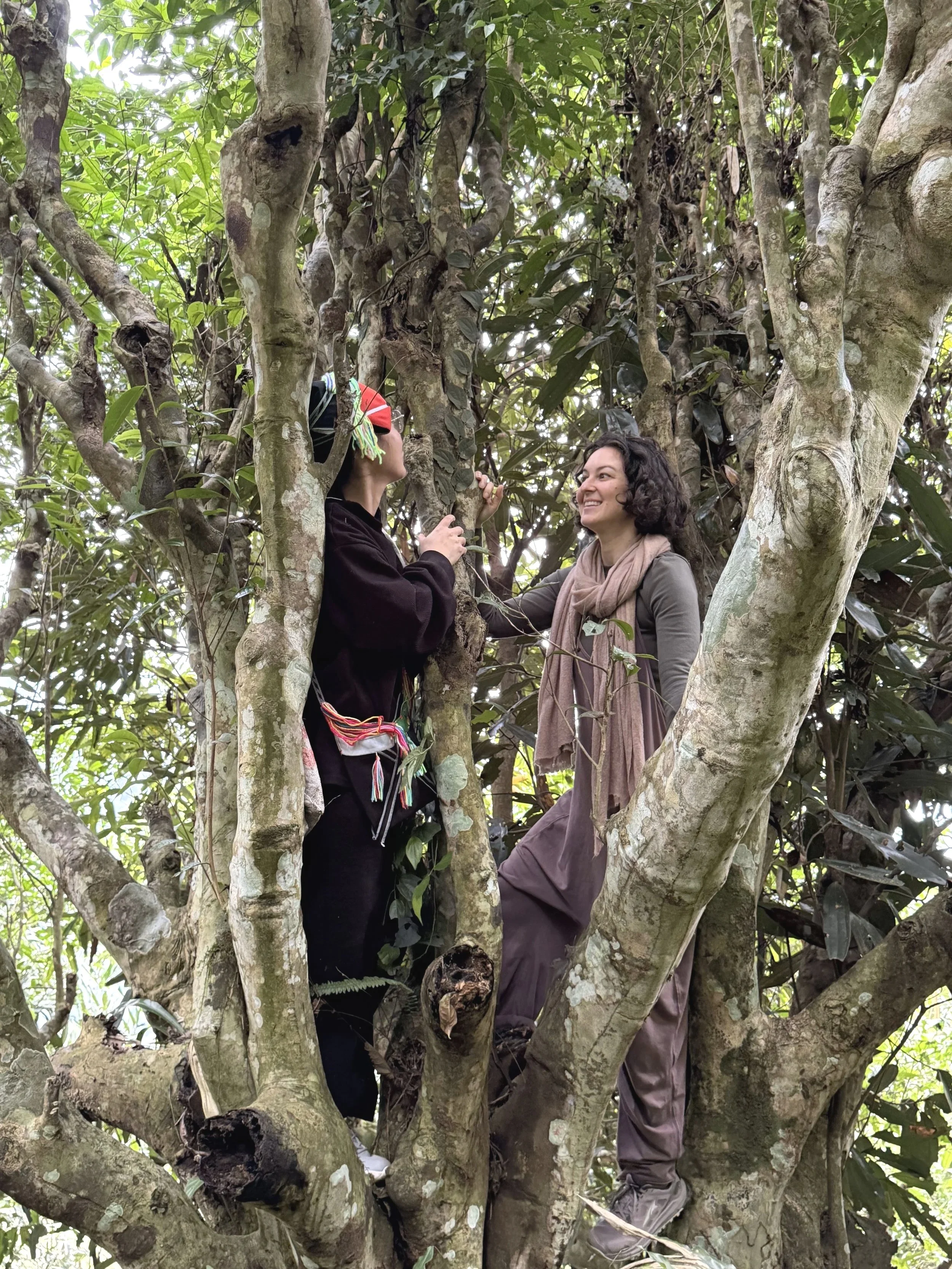
My relationship with tea began long before Tea is MA 間 existed — it started as a quiet, lifelong curiosity that eventually took me traveling through Asia, seeking out the source of the leaf itself.
What I found there wasn't always what I expected. In many of the places I visited, the tea industry told a story of exploitation — of underpaid and forced labor, of land pushed past its limits, of a plant grown for volume rather than respected for what it was. I couldn't, in good conscience, keep drinking tea that carried that story. So I stopped, and I began looking for another way.
That search led me to a different kind of tea maker — small-scale artisans who approached tea not as a commodity but as a practice. People who valued harmony with the land over yield, who worked in rhythm with the seasons rather than the market, who seemed to be listening to the plant rather than extracting from it. What began as a personal quest — just trying to find tea I could drink with a clear conscience — slowly turned into something I wanted to share. I brought these teas back to my own tea circle, poured them for friends, and watched the same sense of care and presence I'd felt at the source translate into the cup. That sharing never really stopped, and eventually it grew into Tea is MA 間.
Alongside this journey, I am a student of the Urasenke school of traditional Japanese tea ceremony, where my practice continues to deepen my relationship with tea as ritual rather than routine. This connects with an extensive background in meditation, traditional hatha yoga, and mindfulness practice — lineages that, together with tea ceremony, now shape the way I offer tea to others. I weave these threads into meditative, embodied tea experiences and ceremonies — spaces where tea becomes a doorway into presence, stillness, and connection, both with ourselves and with each other.
Tea is MA 間 is, in many ways, an extension of that original search: an invitation to pause, to taste with attention, and to meet tea — and the people who grow it — with the respect they deserve.